
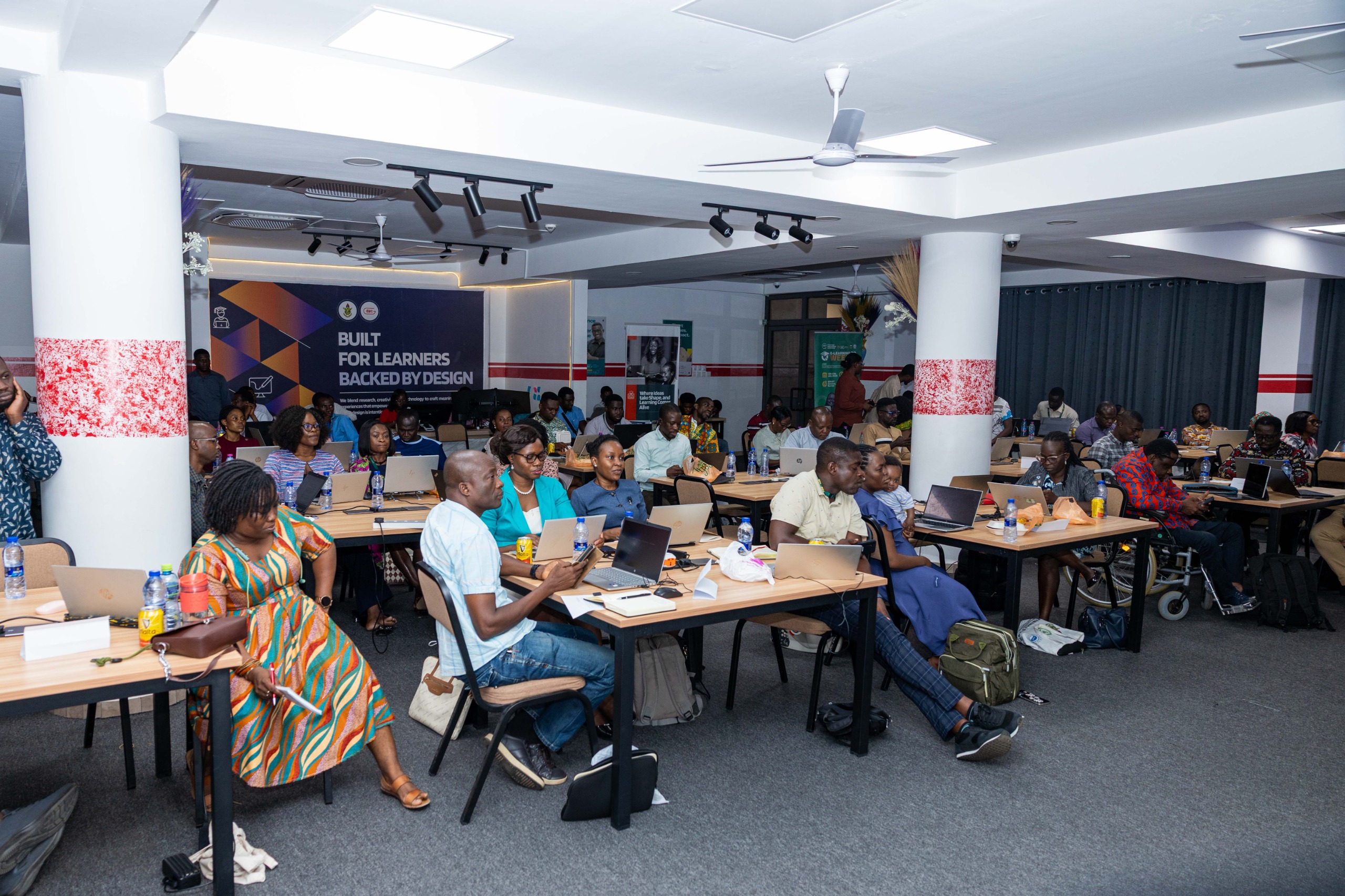
The E-Learning Centre at the Kwame Nkrumah University of Science and Technology, Kumasi (KNUST) has trained 50 faculty members and 50 students to use Google’s Gemini artificial intelligence tools in teaching, learning, research and university administration.
The two-day programme brought together faculty members on the first day and students on the second. Participants were drawn from colleges across the university for practical sessions led by Emmanuel Adeniyi, Higher Education Lead for West and Central Africa at Google for Education.
The training followed an earlier online session for faculty members and formed part of KNUST’s partnership with Google to provide access to AI tools and develop the skills to use them.
The Director of the KNUST E-Learning Centre, Professor Emmanuel Kofi Akowuah, said the university was promoting the responsible use of AI among staff and students.
“We have adopted AI, and then we have even ethical use of the AI focused on students and staff, so we are embracing it and then making sure that every one can make the maximum use of it,” he said.
Professor Akowuah said the university wanted to integrate AI into teaching, learning and administration. He called for an expanded partnership with Google, with faculty members leading its use and helping colleagues develop similar skills.
“We want to take it to a higher level,” he said.
KNUST was using a “trainer and ambassador model” to extend the training’s reach, he said. Participants would be expected to share their knowledge with colleagues and support wider adoption across the university.
The faculty session covered the use of Gemini in teaching, learning and research. Adeniyi also introduced the Gemini Certified Faculty course, designed to help lecturers use AI responsibly in academic work, including assessment.
“It’s important for universities to learn to navigate the AI era,” he said.
Adeniyi said students were already using AI tools, including free platforms that might not offer the same data protections as institutional services. He described this unsupervised use as “Shadow AI” and warned that information entered into some free tools could be used to train AI models, potentially exposing research or other sensitive material.
He said Gemini for Education, which KNUST accesses through the partnership, offered enterprise-level security protections and that data generated within the university’s environment would remain there.
“Google will never use the information to train our model,” he said.
The student session focused on using Gemini to understand complex topics, work with simulations and prepare presentations. It also covered responsible AI use and the need to consider what information students enter into such tools.
Professor Akowuah urged the students to apply what they had learnt and help others in their colleges use the tools.
“You are not here as just spectators,” he told them.
He said the students were an initial group and that KNUST planned to organise university-wide online training to broaden participation. Participants would also be expected to organise peer-learning sessions and help colleagues access the resources introduced during the programme.


